Spring Sales πŸ€ Shop Now

Brewing

New Sensory Training Kit - March 2026 Release

Train Sensory Skills - Explore Specialty Coffee WITH ME,

I specifically designed this coffee sensory kit as an accompaniment to the SCA Introduction to Coffee course which instructed the high-level differences between:

  1. Coffee Species: Arabica vs. Robusta Canephora

  2. Coffee Grades: Commercial Grade vs. Specialty Grade (80+ points)

  3. Coffee Processing Methods: Wet-Washed vs. Natural Dry Process

  4. Roast Levels: Lighter vs. Darker Roasting

This is a really fun coffee tasting kits with 4 pairs of the coffee listed for both coffee fans looking for a new tastebud experience and for coffee professionals who seek to continue growing. It’s a great way to distinguish between subtleties of fragrance, aroma, body, acidity, mouthfeel and overall coffee quality in a controlled manner.

Coffees are roasted on the same machine, same day, same roast master, and with similar methods to ensure that you get the highest quality scientifically traceable sensory experience in your cupping, brewing and tasting.

Coffee sourced from friends like: Royal Crown Jewels, Genuine Origin, Cuatro Vientos and Victory Java.

included in the march 2026 release are the following coffees

Be sure and checkout the accompanying brew/taste videos too!


4 Contrasting A-B Pairs:

  • YouTube Tasting Link: https://www.youtube.com/watch?v=UUc-OWKLsBk&t=2s

    • SP1 - Arabica Species Indonesia, West Java, Blue Batavia G1 TP Semi-Washed Giling Basah Process with classic chocolate lush herbal aromatics, mild acidity, full round body and clean smooth finish.

    • SP2 - Robusta Canephora Species Vietnam, Altura - High Grown, Natural Process with heavy aromatics of roasted grain, brown spice, and fresh rubber (tire shop) big heavy chewy body with no acidity and heightened bitterness.

  • YouTube Tasting Link: https://www.youtube.com/watch?v=TlLWANQlZcg&t=34s

    • GR1 - Grade / Quality Score Higher Specialty Kenya, Ngomano AB, Washed Process with strong tropical mango lime fruit, big sweetness and syrupy body that lingers long.

    • GR2 - Grade / Quality Score Lower Past-Crop Colombia, Gesha Variety, Honey Process with floral and sweet qualities, but mixed with papery notes and disappearing finish hollowed body.

  • YouTube Tasting Link: https://www.youtube.com/watch?v=y5tKeQV0maI

    • PR1 - Washed-Wet Process Papua New Guinea, Organic Lahamenegu, Washed Process with bright citrus and pine notes, medium acidity and body with classic chocolate finish (note the lack of red-fruit).

    • PR2 - Natural-Dry Process Colombia, Pink Bourbon, Juliana Guevara and Wbeimar Lasso, Fermented Natural Process with big fruit hibiscus and cherry lemonade, deep sweetness, syrupy body and long lasting chocolate finish (this is a special process so there is heightened acidity).

  • YouTube Tasting Link: https://www.youtube.com/watch?v=kK_EGdErzC0

    • RO1 - Lighter Roasted Arabica Coffee Colombia, Santa Maria Collective, Washed Process - well balanced medium acidity, full body, apple, citrus, chocolate with sweet clean aftertaste.

    • RO2 - Darker Roasted Arabica Coffee Colombia, Santa Maria Collective, Washed Process - acidity muted by roasty, spicy, dark chocolate. Some body may be compromised, but mouthfeel is full with lingering dry aftertaste from roast level.

Four A-B cupping placemats and coffee flavor wheel printouts also included. All coffees are Arabica species unless otherwise specified and will be packaged as ~4oz or ~100g - post roast weight.

Download additional A-B Tasting Placemats below.

Updated Cohort Calls Model for HowToCoffeePro and SCA Training

Hey Friends!

Adam at ROCC Coffee at SCA.Training and HowToCoffeePro. I have an exciting announcement if you are a new learner on the fence or one of our alumni. So, stay tuned and be sure to pay attention.

First, you want to ensure that you are on our: Email List so that you get every announcement about new course offerings, the cohort calls and the Live social media sessions that we are going to be having.

So here’s the update: all of our courses that had been self-paced and self-directed with one-on-one coaching are now moving to a more dynamic cohort model. 

SCA Training International Cohort!

To provide you with distance learning convenience with a cohort team and class experience. This is something we’ve been working on for a long time to build, and in part we just needed to have a greater number of alumni and students. And now we’re there.


As of August 1, 2022 we want you, we want new learners to watch for the Open-Enrollment window of time. This is the open enrollment when you can join into a course. The first course, for example, is going to be Sensory Skills Foundation, and it’s going to be open for 10 days. Sensory Skills Foundation, all the new learners should join from August 1st - 10th.

Now, these will be changing and updated by email.
Every student who joins this course will be able to start your study, work on your practicals for the course and you may even have time to complete the entire course. Wait for the announcement for our first Google Meeting and class call. All of our new students, that first cohort are going to be invited.

You need to attend the call, just like you attend your class in order to keep progressing. We also are going to invite in our alumni.

We’ve got dozens… hundreds of students who have taken specific courses over the past years, we want them to come in and to join your course. Not only will you be able to ask me questions and to interact with your classmates in that meeting.

We want the alumni to share with you what it’s like to go through that course and take steps in their career and in their coffee business.

Open Enrollment will close and you’ll have to wait to the next class to get into the next cohort. Yet, once you’re an alumni, if you took this course last year, you’re always a part of that group. So every time a new cohort joins you’ll alway be able to join. 

We’ll be cupping, we’ll be roasting, we’ll be looking at equipment. Once you start this program (as long as you want to stick around) we’re going to keep developing and creating meetings with classes for you to visit.

We’ll be sending those out by social media and sharing those by email so be sure to:

Those are going to be the three hot places to be, though more may be coming, and we’ll be sure to share the news. 

If you’ve been thinking about joining an online SCA course and if you’ve been asking, β€œwhat’s the online experience going to be like?” This is the time, it’s going to be rich and it’s going to be flexible and it’s going to be dynamic with an international cohort from around the world. 

Once you join, you’re a part of our Community of HowToCoffeePro alumni, so come on back alumni, please join us for these calls, watch for the announcements, join in on the Instagram lives. We would love for you to speak into these topics. Tell us about your company, tell us about your career and the challenges you have faced and overcome.

We need to give hope to the next generation of coffee professionals. That’s what HowToCoffeePro is all about: giving you the how to skills to become a coffee professional and Make Life Better.

I can’t wait to see you in class! 

Come on, let’s go.

How to Make a Perfect Aeropress Coffee with x5 Recipes

Have you ever tried the Aeropress Coffee Maker? It’s a personal favorite of mine. However, like most things β€œcoffee” in the world you’ll find mixed opinions and lots of picky recipes.

I LOVE AEROPRESS COFFEE!

In this blog and video I’ll share with you 5 GREAT RECIPES with 5 important rules to help you make a perfect Aeropress Coffee every time! Let’s get started with the video, rules and recipes below.

How to Brew a Great French Press in 10 Easy Steps

Here is a video demonstrating a simple French Press coffee recipe.

French Press coffee is an immersion brew. That means that the coffee and water soak together, steeping together to extract the coffee solubles. It is an old, tried and true method of brewing.

The benefits/drawbacks of French Press (immersion) style brewing include:

  • Increased body and full rich mouthfeel.

  • Increased coffee oils, flavors and aromatics.

  • Super simple, repeatable results.

  • Great with medium and dark roasted coffees.

  • Pairs well with milk and sugar.

  • Positive impression when serving friends.

  • Decreased clarity in specific coffee flavors.

  • Danger for old coffee oils to accumulate if mesh screen is not cleaned properly.

  • Great for travel or camping - just add hot water.

French Press Brewed with Fresh Kenyan Coffee

The last point for travel is what prompted me to shoot this video with my new Kohipress. It’s a great travel companion and produces a cleaner cup than straight campfire coffee. What is campfire coffee you may ask, just pour hot water into coarse ground coffee, steep, drink. Spit out the grounds or chew them up for bonus fiber : )


French Press Brewing Rules:

  1. Prepare a 1:15 brew ratio.

    1. My travel Kohipress is 26g coffee for 400ml H2O

    2. My home Bodum press is 55g for 950ml H2O (that’s a full press)

    3. Calculate your own by dividing press brew volume by 15 to discover __ coffee grams. (Hint, this works because 1ml H2O = 1g H2O)

  2. Use coarse ground coffee.

  3. Prepare 95β€’C or 203β€’F degree H2O

  4. Rinse and warm your press

  5. Pour 1/3 of your H2O into your press and swirl or stir to ensure all grounds are wet

  6. Pour remaining H2O into press

  7. Set plunger lightly into coffee to cover and remove air/bubbles

  8. Wait 4 minutes

  9. Plunge slowly

  10. Pour and enjoy!


If this was a worthy read, please consider sharing and liking.

Thank You! ~ Adam

How to Freeze Coffee Like a Pro - Can I Freeze My Coffee?

Can I freeze my coffee beans?

Simply put - Yes! However, by saying that, I immediately open myself to criticism. So, please allow me have have 5 minutes of your time to explain why, how and when you may choose to freeze your coffee.

Others may offer conflicting advice. One says, β€œyou can freeze your coffee, I freeze mine all the time.” Another scolds you strongly, β€œYou should never freeze your coffee!” But, what lies under their assessment? The reason they freeze or do not freeze is entirely different.

To freeze or not to freeze, that is the question.

What’s really happening to those frozen coffee beans? The answer is rooted in science and is quite easy to understand. Ultimately we all want to enjoy the best tasting coffee possible. No matter how you define β€œgreat coffee” no one intentionally makes their coffee taste worse.

Sadly many people do unintentionally make their coffee taste worse.

So where does coffee flavor come from and how is it destroyed? By understanding this, we will come to our conclusion and answer the age old question, β€œcan I freeze my coffee?” But, we’ll take it a step further to answer more importantly, β€œwhen and how should I freeze my coffee?”

Can I freeze my coffee?

I repeat, yes you can freeze your coffee. The goal here is to preserve freshness. Fresh coffee tastes better than stale coffee. How does coffee go stale? After the beans are roasted they become highly susceptible to oxidation. Oxidation is a fancy word for β€œgoing stale” (or in British English we say β€œgoing off”). This is why you should pay attention to β€œbest by” or β€œroasted on" dates stamped to your coffee bag.

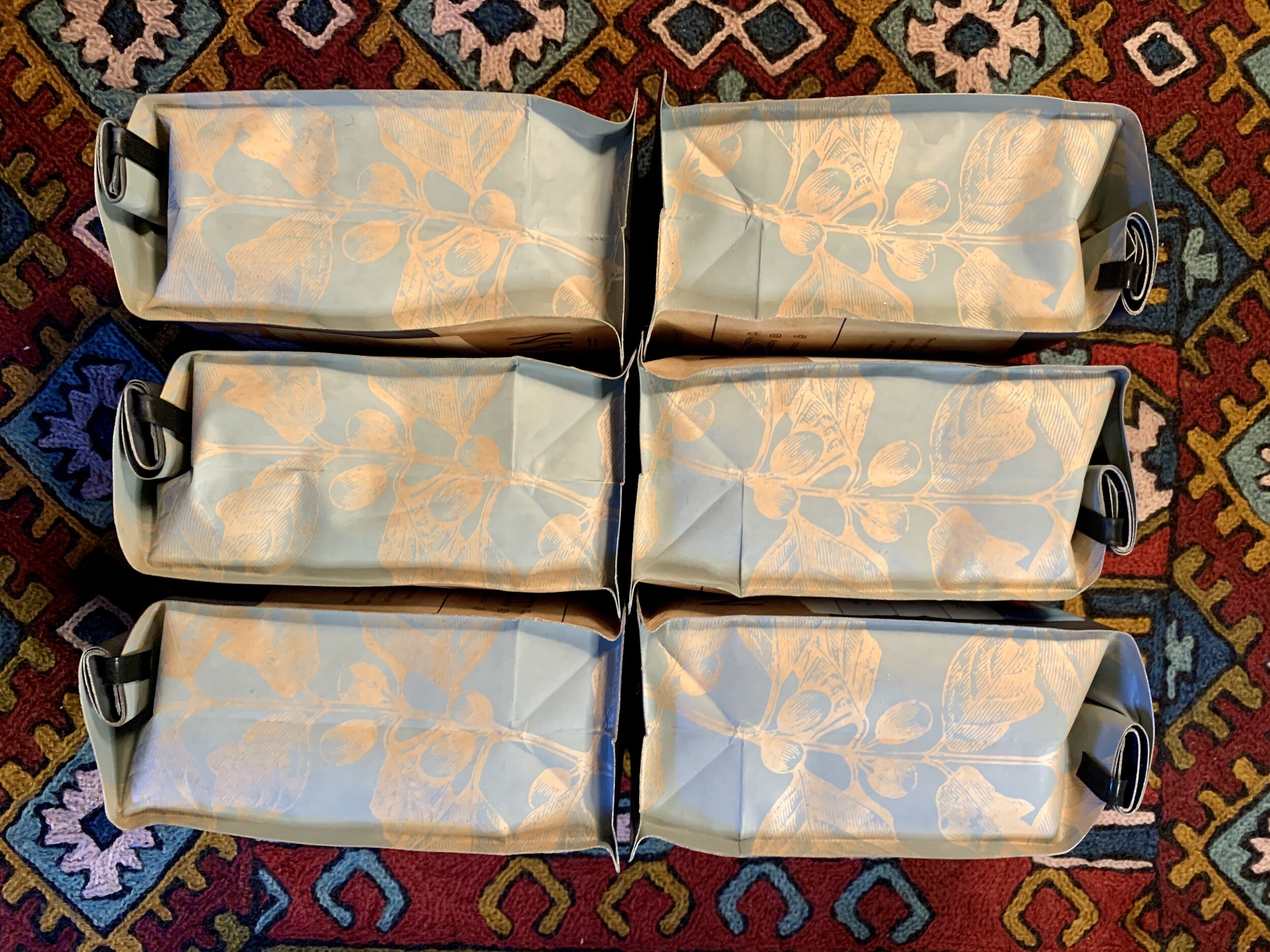
What if your friend sends you 6 bags of coffee!?!

What if your friend sends you 6 bags of coffee!?!

When we open a bag of coffee - it smells great. So good in fact, that days and weeks later, you long for a new fresh bag of coffee. That’s because over days and weeks time oxygen has been hard at work infiltrating your beans, stealing away volatile aromas and complex compounds which should be dissolved and enjoyed in your brewed cup. But, oxygen stole them.

This oxidation process happens even faster when you pre-grind your coffee, leave the bag open, store beans in hot or damp conditions and place in clear containers where UV light penetrates the beans. In reverse, we can state the BEST PRACTICES for ensuring coffee freshness (and in turn tastiness!)

βœ“ Grind beans fresh each time.

βœ“ Close coffee bag to remove air and seal properly.

βœ“ Store coffee in a cool, dry, dark place.

When should I freeze my coffee?

The answer, it when you have too much. Freeze your excess coffee. Let’s pretend you have a vacation home and you only visit on occasion - freezing the remaining coffee, is much better than leaving it in the cupboard for months until your next holiday. What if, your favorite artisan coffee roaster sends you several bags of your favorite micro-lot single origin coffee - freeze the extra bags. If you love Christmas blend, then naturally you can only buy it once a year - freeze some to enjoy during the summer.

Freeze your excess coffee.

Let’s talk about the science of freezing real quick. Think water and ice. Water is a liquid because its particles are actively moving. Oxygen is moving in and out of liquid water. Ice on the other hand is solid - almost non-moving. Yes, frozen molecules move super super slowly. So, at best, oxygen can only bump up against the hard immovable bean shell.


Break it into smaller brew size bags for quick future use. Store in a second bag in back of freezer.

Break it into smaller brew size bags for quick future use. Store in a second bag in back of freezer.

How should I freeze my coffee?

Now, for the fun part. Grab yourself several plastic bags. Plastic works better than paper in the freezer to block air and moisture. Breakdown your excess coffee into small portions that you can easily use in 1-2 weeks. Zip these smaller portions up and toss them into a second larger bag for double barrier protection and place them in the back or bottom of your freezer - ideally away from the door where repeated opening causes larger temperature fluctuations.

Next time you visit your vacation home or have a hankering for Christmas blend - pull one of those frozen packs out, brew, enjoy and store in a cool, dry place. These coffee freezing tips will protect your coffee beans, coffee grounds and yes, even k-cups… although there isn’t much left in a k-cup to protect : )

Note of caution: Freezing, thawing, refreezing, and thawing again creates excessive moisture on the coffee due to condensation. Avoid refreezing. Once out - leave out to use completely.

Congrats!
Now you can freeze your coffee like a pro!

Also found at YouTube: https://youtu.be/UxDYjmisMcc

If this was a worthy read, please consider sharing and liking.

Thank You! ~ Adam

Certification for Coffee Brewers - Online SCA Courses

BREW TIME

  • The amount of time the water is in contact with the coffee will allow different quantities of solids to be dissolved. This results in different brew times for different brew methods and volumes

  • Describes the amount of time for the following:

  • Filter Coffee (1ltr/32oz +) 4-6 minutes;

  • Single cup filter 1-3 minutes,

  • Espresso 20-30 seconds

WATER TEMPERATURE

  • The correct water temperature is required to dissolve the desired flavors from the ground coffee. This range is 92 - 96C/195 - 250F

  • Defines the correct temperature range for water used to brew coffee